バイブルスタディ
 admin_acc
信仰と科学:相反しない二つの真理の探求
https://www.accjapan.org/audio_archives/
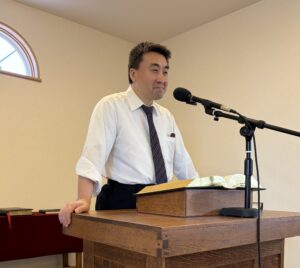
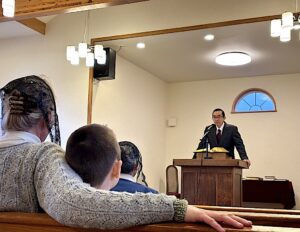
2026年6月21日の午後のバイブルスタディにおいて、信仰と科学の関係性についての考察がなされました。説教の全体的なテーマは、「信仰と科学は相反するものではなく、それぞれが異なる領域で真理を探求するための手段である」という点にあります。ヘブル人への手紙11章を基に、信仰の本質を解き明かし、科学的な証明が及ばない領域における信仰の重要性が語られました。
要約
- 信仰とは、ヘブル人への手紙11章1節にあるように「望んでいる事柄を確信し、まだ見ていない事実を確認すること」です。これは、観測や実験に基づき、客観性、再現性、観測可能性を条件とする「科学」とは根本的に異なる領域のものであると理解できます。
- 子供の頃、天地創造の教えとビッグバンや進化論といった科学的な話の間で疑問を感じましたが、成長するにつれて、両者は対立するものではないと考えるようになりました。信仰と科学は、それぞれが異なる問いに答えるための、異なるアプローチなのです。
- 科学は「観測できるもの、計測できるもの、再現できるもの」を扱います。一方で信仰は、観測できないけれども確信し、心から望むものを扱います。この二つを「科学か信仰か」という二者択一で悩むこと自体が、そもそも間違いであったと気づきました。
- 社会心理学(ソーシオロジー)が良い例です。この学問は、人の心理が経験によって変化するため、厳密な科学的再現が難しいとされています。しかし、科学的に証明できないからといって、その学問が無意味なわけではなく、非常に役立つものとして存在しています。
- 同様に、経済学など多くの学問分野は、科学的な実証が困難な場合でも、その有用性から価値を認められています。世の中には科学では説明できない、あるいは証明できないけれど、意味があり役立つことが数多く存在しているのです。
- 神様の存在を「科学的に証明します」と試みることは、聖書の教えに反します。イエス様が悪魔の試みに「神様を試してはいけない」と答えたように、神は私たちの計測の物差しを超えた、計り知れない存在であり、科学的証明の対象にはなり得ません。
- かつての科学者たちの多くはクリスチャンであり、彼らは神が創造した世界の法則を解き明かすことを動機として科学を追求しました。彼らにとって科学とは、神の創造の素晴らしさを知るための手段であり、信仰と一体のものでした。
- コリント人への第一の手紙13章12節には「私たちは今は鏡に映して見るようにおぼろげに見ている」とあります。これは、人間がこの世の全ての仕組みを完全に理解することはできないという聖書の教えを示しており、科学の限界をも示唆しています。
- 科学には、実験によって再現可能な「実験科学」と、過去に一度だけ起きた出来事を痕跡から推測する「歴史科学」があります。進化論などは後者に分類され、仮説は立てられても、実験による証明が不可能な領域です。
- 信仰は、頭で聖書の真実性を理解するだけでなく、心から悔い改め、心が変えられる体験によって確立されます。見えないものを確信し、望んでいる事柄を確認する、この聖書の定義に立ち返ることが、私たちの信仰生活の基盤となります。
Faith and Science: Exploring Two Non-Contradictory Truths
During the afternoon gathering on June 21, 2026, the relationship between faith and science was examined. The overall theme of the sermon was that faith and science are not contradictory, but rather means of exploring truth in different domains. Based on Hebrews 11, the essence of faith was elucidated, highlighting its importance in realms beyond scientific proof.
Summary
1 Faith, as stated in Hebrews 11:1, is "the assurance of things hoped for, the conviction of things not seen." This is fundamentally different from "science," which is based on observation and experimentation, requiring objectivity, reproducibility, and observability.
2 As a child, I felt conflicted between the teachings of creation and scientific theories like the Big Bang or evolution. As I grew, I realized they are not contradictory. Faith and science are different approaches to answering different questions.
3 Science deals with "what can be observed, measured, and reproduced." Faith deals with what cannot be observed but is believed and sincerely hoped for. Viewing it as a choice between "science or faith" was a mistake.
4 Social psychology is a good example. It is considered difficult to reproduce scientifically because human psychology changes with experience. However, just because it cannot be scientifically proven does not mean it is meaningless; it exists as a very useful discipline.
5 Similarly, many fields like economics are recognized for their value due to their utility, even when scientific verification is difficult. There are many things in the world that cannot be explained or proven by science but are meaningful and useful.
6 Attempting to "scientifically prove" the existence of God contradicts biblical teaching. As Jesus answered the devil's temptation by saying "Do not test the Lord," God is a fathomless existence beyond our measuring stick and cannot be the subject of scientific proof.
7 Many early scientists were Christians who pursued science with the motivation of unraveling the laws of the world created by God. For them, science was a means to know the magnificence of God's creation and was one with faith.
8 1 Corinthians 13:12 states, "For now we see in a mirror dimly." This biblical teaching indicates that humans cannot fully understand all the mechanisms of this world, suggesting the limitations of science.
9 Science includes "experimental science," which is reproducible, and "historical science," which infers what happened from traces of unique past events. Evolution falls into the latter, where hypotheses can be made, but experimental proof is impossible.
10 Faith is established not just by understanding the truth of the Bible with the head, but by sincere repentance and the experience of having one's heart changed. Returning to this biblical definition—being convinced of things not seen and confirming things hoped for—is the foundation of our life of faith.